

You’ve found your person, now comes the part that makes your heart skip and your wallet sweat: the ring.
Between “three months’ salary” myths, sky-high averages, and endless sparkle on your feed, it’s easy to lose track of what’s realistic. The truth is, there’s no magic number. The best engagement ring budget fits your life, your finances, and your story together.
This part can feel intimidating, and that’s okay. It’s a big purchase, but it’s also a big moment. You deserve to feel calm, confident, and proud of the choice you make.
Smart engagement ring budgeting helps turn a major purchase into a meaningful milestone. Every choice leads you closer to your dream ring, one that reflects your love and your style. And yes, you can have beauty, quality, and meaning without overspending or overthinking.
In this guide, we’ll walk through how to plan your engagement ring budget smartly from understanding what drives the cost to finding clever ways to maximize value.
Why a Realistic Ring Budget Matters
Buying an engagement ring feels huge, both emotionally and financially.
The old “two or three months’ salary” idea came from advertising, not financial logic. What matters is your actual personal financial situation: your income, savings, and what you’re planning for next. Strong financial health helps you celebrate this milestone without affecting long-term financial security.
Right now, the average engagement ring cost in the U.S. is around $5,000 to $6,000, but average spending depends on income and annual salary. The three-month salary rule may be outdated, but understanding your own comfort zone keeps your ring budget realistic and balanced.
Maybe you care most about a well-cut diamond. Maybe your future spouse loves yellow gold or prefers a smaller, custom ring. The goal is to make a meaningful choice that fits both your priorities and your wedding budget.
What Affects the Cost of an Engagement Ring
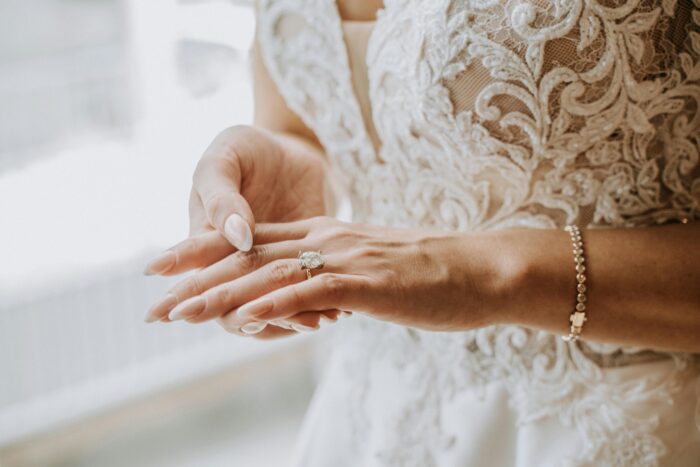
Before you set your budget, it helps to see what you’re actually paying for. Engagement ring pricing can feel mysterious at first, but once you break it down, it all makes sense.
The cost of an engagement ring depends on several factors, each adding its own story to the final price and helping explain where your money really goes.
Here’s where your money actually goes:
1. The center stone
This is where most of your ring budget goes, and for good reason. It’s the part everyone notices first. The center stone defines the ring’s overall look, and its quality can dramatically change the price.
When it comes to diamonds, everything revolves around these factors:
Cut
Cut refers to how precisely a diamond is shaped and proportioned. It affects how light travels through the stone and determines its brilliance, fire, and sparkle.
Even with identical carat weights, a well-cut diamond will reflect light more effectively and appear brighter.
The standard cut grades are Excellent, Very Good, Good, Fair, and Poor, and this factor often has the greatest influence on overall diamond engagement ring quality.
Color
Color is graded on a scale from D to Z. D represents colorless natural diamonds, while Z indicates noticeable yellow or brown tint. The less color present, the higher the grade.
The setting metal can visually influence color perception, but the grade itself measures the stone’s body color.
Clarity
Clarity measures the number, size, and location of internal inclusions and external blemishes.
Grades range from Flawless (F) to Included (I3).
Flawless diamonds have no visible imperfections under 10x magnification, while lower grades contain inclusions that can vary in visibility depending on their type and position.
Carat Weight
Carat is the standard unit of measurement for a diamond’s weight, not its size.
One carat equals 200 milligrams. Although weight and visual diameter are related, proportions and cut depth can make two stones of the same carat appear slightly different in size.
Shape
Shape refers to the diamond’s outline, like round, oval, pear, princess, or cushion.
Each shape reflects light differently and creates a unique style. Round diamonds usually cost more because they require more precision and material loss during cutting, while everything else often costs less per carat.
2. The setting
The setting holds the center stone in place and defines much of the ring’s style. It affects durability, comfort, and overall cost, depending on craftsmanship and materials.
Metal Type
Most engagement rings use platinum, yellow gold, white gold, or rose gold.
Platinum is the densest, often favored for its longevity and bright white finish. Yellow gold has a warm, classic tone that complements many skin tones, while white gold offers a sleek, contemporary look. Rose gold, with its subtle pink hue, gives a romantic, vintage feel.
Each metal varies in cost, density, and resistance to wear.
Design Complexity
The more intricate the setting, the higher the craftsmanship involved.
Solitaire settings highlight a single stone and are typically simpler. Halo and pavédesigns feature additional smaller diamonds, increasing both brilliance and price.Three-stone rings, vintage-style settings, or custom ring designs also add labor time and material use, affecting the total.
3. The source
Lab grown diamonds are created in advanced laboratories that replicate the same pressure and heat conditions found deep within the Earth. Mined diamonds form naturally over billions of years through geological processes.
Both have identical chemical composition, hardness, and brilliance. They’re indistinguishable to the naked eye and graded by the same gemological institutions, including GIA and IGI.
The main difference lies in origin and cost. Lab-grown diamonds typically cost 40–70% less than mined diamonds and involve far less labor, offering a modern, efficient alternative with the same authentic sparkle.
4. The Extras
Beyond the stone and setting, several smaller details shape the final cost of an engagement ring. They may not be as visible, but they play a big role in overall value and long-term maintenance.
Certification
A certified diamond or gemstone comes with documentation from a recognized grading authority, such as GIA or IGI. The certificate outlines characteristics like cut, color, clarity, and carat weight, verifying authenticity and quality. Certification adds credibility but can slightly raise the final price.
Customization
Adding personal touches like engravings, unique prong styles, or tailored band designs introduces additional craftsmanship and labor. Each modification influences production time and final pricing.
Insurance and Maintenance
Engagement rings are long-term pieces, and insurance protects against loss, theft, or accidental damage. Maintenance, including cleaning, polishing, and prong tightening, keeps the ring secure and radiant over time. These ongoing costs are worth factoring into your overall plan.
Knowing these elements helps you set priorities early. You’ll see exactly where to spend, where to save, and how to keep your ring budget intentional from the start.
Smart Strategies to Maximize Value

A bigger budget doesn’t always mean a better ring. What matters is how you use it. These strategies help you stretch every dollar while keeping craftsmanship, sparkle, and meaning intact.
1. Focus on cut quality first
A well-cut diamond catches light better than a larger or higher-grade stone with a weaker cut. Prioritize brilliance over carat weight. Your eye naturally notices the sparkle before the size.
2. Choose near-colorless grades
Diamonds in the G–I color range look virtually identical to colorless ones in most lighting. They cost less but deliver the same visual beauty, especially in yellow or rose gold settings.
3. Consider lab-grown diamonds
Lab-grown diamonds are real diamonds, identical in structure and brilliance to mined ones, but typically 40–70% less expensive. The savings let you explore higher carat weights or more detailed settings.
4. Explore alternative shapes
Round cuts are the most popular and the most expensive. Fancy shapes like oval, pear, marquise, or cushion can appear larger at the same carat weight and often come at a lower price point.
5. Keep the setting simple
Sleek solitaire or bezel designs highlight the center stone while reducing extra diamond or labor costs. They’re timeless, durable, and pair beautifully with different band styles later.
6. Buy slightly below milestone carats
Diamonds priced just under common benchmarks (like 0.9 instead of 1.0 carats) look nearly identical in size but cost significantly less due to how carat pricing scales.
7. Shop from trusted sources
Reputable jewelers, like Bridal Rings, provide certified stones, transparent pricing, and expert guidance. Clarity on quality helps you make smarter choices and ensures long-term value.
The key to maximizing value is knowing what truly matters to you and focusing your budget there. A thoughtfully chosen ring feels personal, looks stunning, and reflects confidence in every detail.
Book an Appointment with Bridal Rings
Once you’ve outlined your budget and learned what affects price, the next step is to see everything in person. Photos can’t capture how a diamond catches light or how a setting feels on your hand. That’s where an in-store appointment makes all the difference.
At Bridal Rings, expert jewelers guide you through every option while staying within your chosen budget. You can compare lab grown and mined diamonds side by side, explore different styles, and get honest answers to your questions.
Appointments are relaxed, personal, and designed to help you make a confident, informed choice. Whether you’re finalizing the perfect ring or still exploring ideas, one visit can turn all that research into something real.
Book your appointment at Bridal Rings to find a ring that feels as right as the moment it celebrates.
Conclusion
Building your engagement ring budget is part planning, part emotion. You’re deciding how to mark one of the biggest milestones of your life in a way that feels both thoughtful and real. Once you know what shapes the price, everything falls into place and you can focus on design, meaning, and what feels right for both of you.
The best ring tells your story in metal and light. It’s meant to last, to remind you of where it all began, and to grow with you over time.
When you’re ready to turn ideas into something tangible, visit Bridal Rings. The experts can guide you through every detail and help you find the piece that feels like forever.